
Piling cost in Sydney depends on the ground and the site more than on the rate per metre. Two quotes for the same job can sit a long way apart. The gap usually traces back to what each tenderer assumed about the ground under the rig.
We don’t publish rates, because a rate with no geotechnical report behind it is a guess. The drivers below move the number once the report is in. They’re also the questions our estimators ask first.
Ground conditions and the geotechnical report
The geotechnical investigation is the biggest single input to the price, and our design and construct team reviews it before the tender closes. Ben Collingwood’s Australian Geomechanics Society paper, The False Economy Of A Cheap Site Investigation, puts the problem plainly: “inadequate geotechnical information precludes economical pile design and often leads to qualified piling tenders.”
A qualified tender lists what the tenderer can’t confirm, like founding level or water table. The owner carries that risk until the ground proves it out.
Peter Andrews reached a similar answer in The Hidden Cost of Geotechnical Investigations. He reviewed 201 Sydney geotechnical reports. Thin investigations, he found, lead to conservative design and expensive construction. In practice the founding level, the rock quality and the groundwater reading usually move the price more than the unit rate does.
Pile type, diameter and depth
Pile type follows the ground and the loads. Each type prices differently, because the rigs, materials and time differ. Our post on CFA vs bored piles explains how Sydney ground sorts one from the other.
A bored pile socketed into rock and a CFA pile in sand prove different things. With the bored pile we inspect the spoil to confirm the founding material. The CFA pile drills faster and with less noise and vibration. That suits sites beside occupied buildings. Diameter and depth then scale the concrete, steel and drilling time.
On the Kemps Creek job for Hansen Yuncken the piles ran at 600, 1200 and 1500mm diameter and up to 20m deep. A 600mm pile and a 1500mm pile at 20m are different jobs. They need different cages, concrete volumes and rig time.
Access, groundwater and spoil
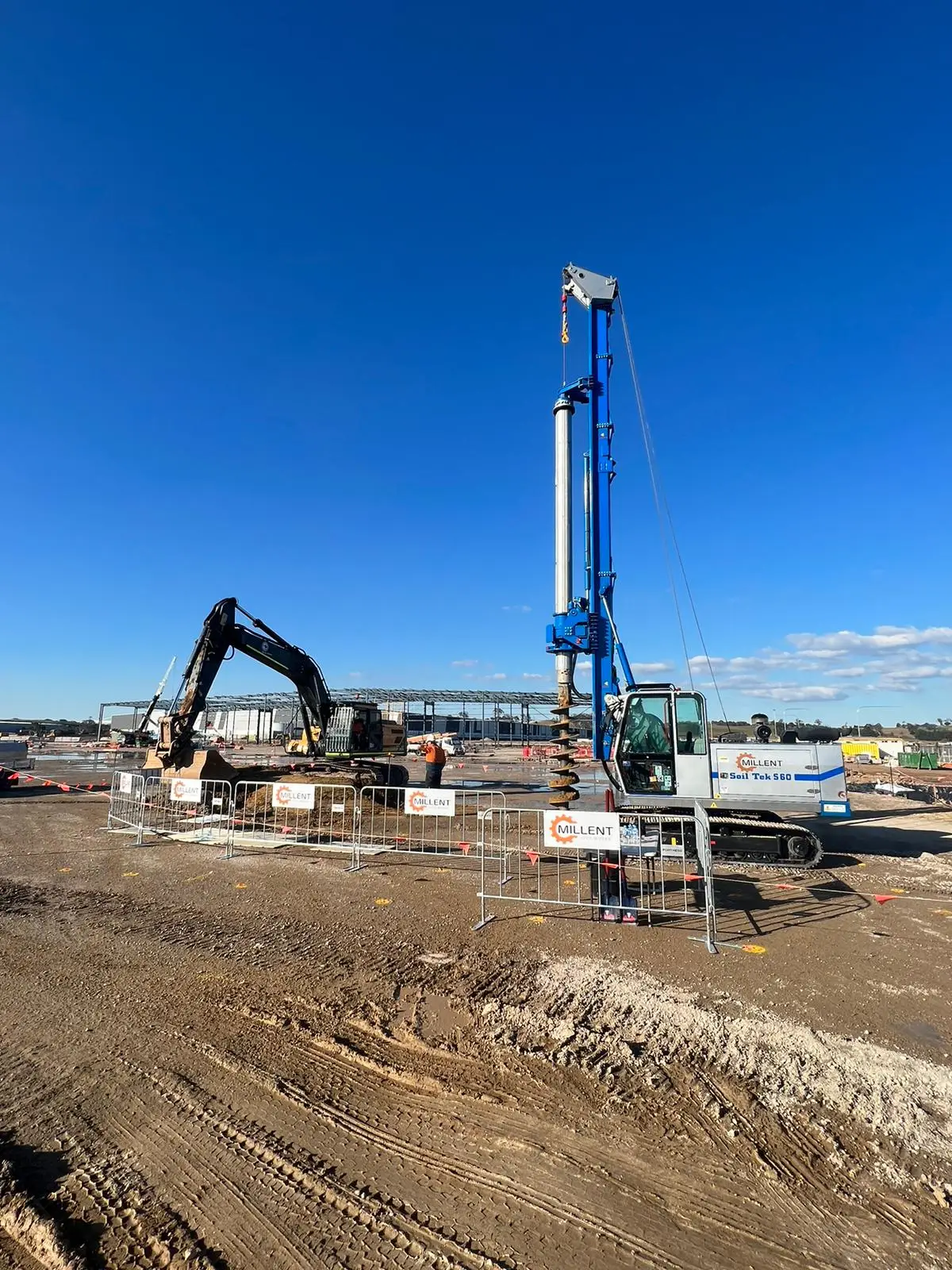
Restricted access slows production and can change the rig. Our Soiltek S60 drilled CFA piles to 11m at The Ribbon Hotel with 5.5m of clearance under a concrete viaduct, and the equipment list shows which rig suits which constraint. We pile within 50mm of a wall or boundary. Lost reach or clearance still costs time, so allow for lower daily output if the rig can’t set up square to the pile line.
Our in-house surveyor checks set-out independently. That matters most on a boundary.
Groundwater and loose ground mean casing, slower drilling and sometimes a switch from bored to CFA. Spoil adds haulage and disposal. Fill or contaminated material costs more to shift than clean natural ground. A wet site with a fill layer gets both.
Mobilisation, testing and design
Getting rigs, cages and a crew to site has a fixed cost. A short job spreads it across fewer piles. We make cages in-house and keep a mechanic on the team, which cuts downtime. Testing gets its own line in the price. We run pile integrity testing and smart data recording on every job, and the specification can ask for more.
Design is the last driver. A construction-only quote assumes the tender design is buildable. By contrast, a design and construct quote includes the design, the professional indemnity insurance and the liability that goes with them. The two prices aren’t measuring the same thing. Our post on early contractor involvement explains why the cheapest changes happen before the tender goes out.
If you can only send one thing, send the geotechnical report. We can firm up a piling price when we have:
- the geotechnical report, including groundwater data
- pile loads, layout and founding levels
- site access, headroom and boundary conditions
- spoil disposal requirements
- program dates and testing requirements
Send those to our estimating team and we’ll return a piling price with every assumption listed.
FAQs
What affects piling cost in Sydney?
The ground and the geotechnical information, pile type, diameter and depth, access and headroom, groundwater and spoil, and mobilisation, testing and design.
How much does piling cost per metre in Sydney?
We don’t publish a rate, because price per metre depends on the ground, pile type, diameter, depth, access and testing. A geotechnical report and pile layout let us quote a firm price.
Why do piling tenders come back qualified?
The Australian Geomechanics Society paper on site investigations says inadequate geotechnical information precludes economical pile design and often leads to qualified piling tenders.
Does restricted access increase piling cost?
Yes. Restricted access slows production and can change the rig, so lost reach or clearance costs time.
Why can a design and construct piling quote differ from a construction-only quote?
A construction-only quote assumes the tender design is buildable. A design and construct quote includes the design, the professional indemnity insurance and the liability that goes with them.