
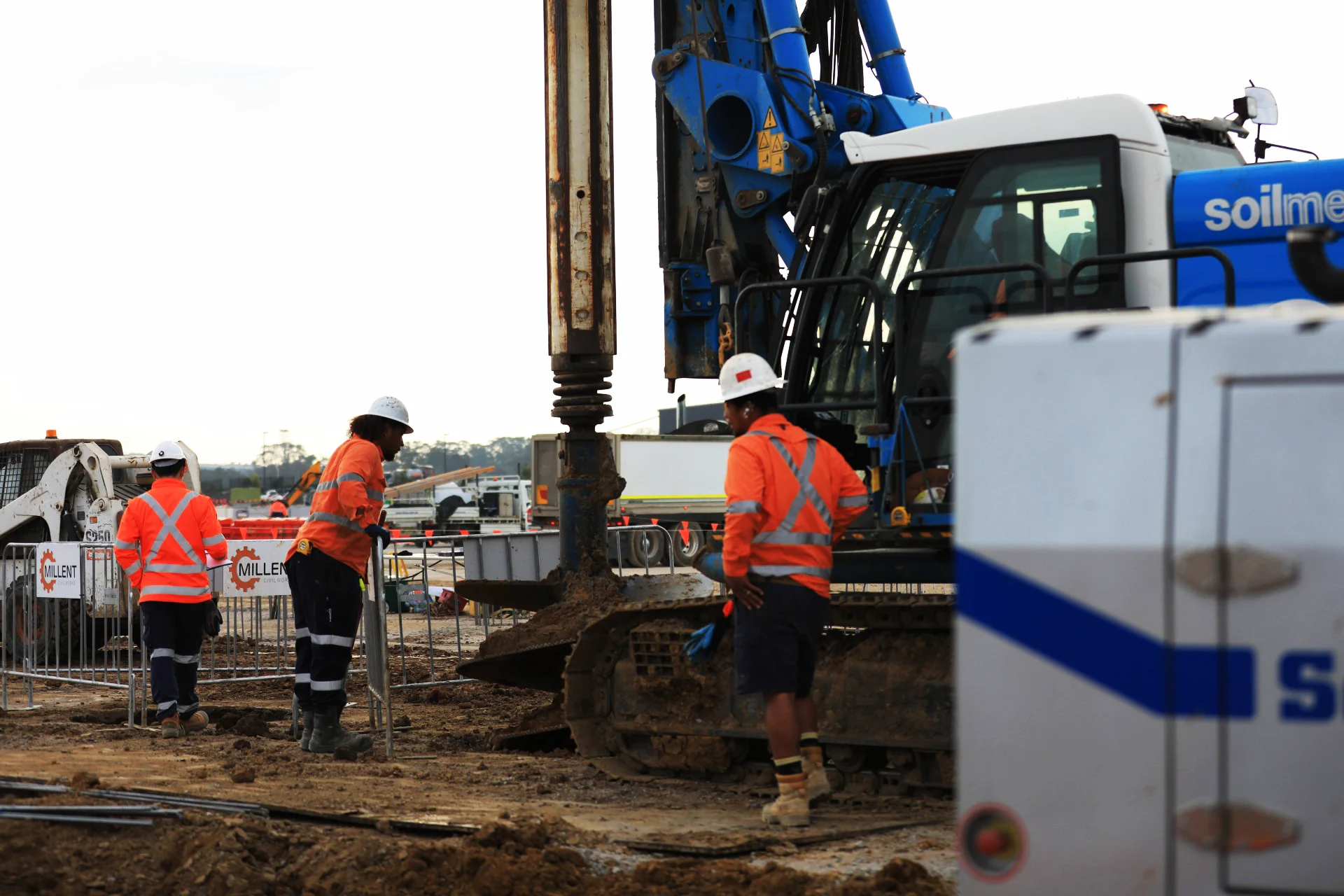
The most expensive lines in a shoring tender get written months before the tender goes out, in the design. By the time prices land on your desk, the pile type, the anchor layout and the excavation sequence have already hardened, and every tenderer prices the same assumptions whether the ground agrees with them or not. Early contractor involvement closes that gap: bring the specialist in while the design is still soft, and someone who has installed a foundation package helps shape it.
What Early Contractor Involvement Means On Substructure Works
It means the piling and shoring contractor reviews the scheme before it locks, testing the design against ground conditions, access, equipment and sequence. It can run as light as a buildability review at concept stage or as involved as the full design and construct model, where the contractor carries the foundation design itself. This isn’t a fringe idea. The Australian Government’s National Guidelines for Infrastructure Project Delivery cover early contractor involvement as one of the collaborative procurement models in use across Australian public sector projects, for the same reason it works on a private basement: better decisions land while changing them is still cheap.
Where The Savings Come From
The value comes from specific decisions moving earlier:
- A pile type that suits the ground before the spec hardens
- Anchor strategy and neighbouring-owner agreements on the table at feasibility, not at mobilisation
- Temporary works that develop alongside the permanent works, so nobody builds anything twice
- Access, headroom and rig selection that stack up against the real site, not the site plan
- One program covering excavation, piling and anchoring instead of three handovers
Leave any one of them late and the price is predictable. A redesign fee. A standing rig. A variation claim, or a neighbour who lawyers up. If your scheme is still at concept, a buildability review costs a phone call and can save a redesign.
Buildability Is Know-How, Not Desktop Output
A design can be structurally elegant and still unbuildable at the price everyone assumed, and the difference usually lives in constraints that never appear on the drawings. Our Botany Rail project for John Holland ran day and night shifts around rail shutdowns with tight access under overhead signage, and on a job like that you don’t choose the method from a menu, you build it backwards from the possession windows and the clearances. That kind of constraint-first thinking is what a specialist brings into the room at design stage, and it applies just as much to a suburban basement with a neighbour’s garage sitting on the boundary. The piling method that suits the site is a decision with a dozen inputs, and most of them show up earlier than anyone thinks to ask.
From Involvement To Design And Construct
Design and construct takes early contractor involvement to its full extent: one party designs the foundation solution, installs it and answers for it. The practical differences show up quickly. The contractor optimises the design against their own fleet and methods rather than a generic assumption. Budget constraints shape the solution during design instead of triggering redesign after tender. And accountability stops splitting: when the same firm designed the pile and drilled it, no gap opens between designer and installer for a problem to fall into. Infrastructure NSW’s procurement methods guidelines name that single point of responsibility as one of the model’s core benefits. The engineering doesn’t change. Piled foundations are designed and tested to AS 2159 no matter who does the design. The difference is that your designer has already drilled a site like yours.
Involve Us At Concept, Not Tender
Foundation advice is cheapest when the scheme can still move. Once the drawings go out for tender, every improvement becomes a variation. Before that, it costs nothing but a conversation. If you have a project heading toward documentation, send us what exists so far, a concept scheme, a geotech report, even a site address, and we’ll tell you what the ground is going to think of it.
FAQs
What is early contractor involvement in construction?
Early contractor involvement is a procurement approach where a contractor joins a project during design, reviewing buildability, ground conditions, access and sequencing before the design is finalised. It ranges from a design review through to full design and construct delivery.
How does early contractor involvement reduce costs?
It moves key decisions to the point where changing them is cheap. Matching the pile type to the ground, resolving anchor agreements at feasibility and sequencing the works as one program each avoid redesign fees, standing equipment and variation claims later in the project.
What is the difference between ECI and design and construct?
Early contractor involvement engages the contractor to advise during design, while the design responsibility can remain with others. Design and construct goes further: the contractor designs the foundation solution, installs it and carries single-point accountability for both.
When should a piling contractor be engaged on a project?
At feasibility or concept stage, before the design is documented for tender. That’s when a specialist’s input on pile type, anchoring strategy, access and sequencing can shape the scheme without triggering redesign costs.