
Excavation Contractors Sydney
Bulk and detailed excavation for basements, shored sites and infrastructure projects across Sydney and NSW
Millent Civil Works is a family-owned Sydney excavation contractor delivering bulk and detailed excavation across residential, commercial, industrial and rail projects. From confined basement benches to open bulk digs, we sequence the excavation against the shoring, the spoil classification and the dewatering, backed by an excavator fleet from 4.5 to 35 tonnes and in-house piling and anchoring crews.
Our Excavation services
Bulk excavation
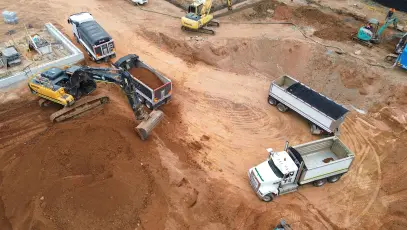
Bulk excavation takes the site from natural ground down to design level. On a basement job the dig runs inside the retention system, bench by bench, so the wall and the excavation advance together. Truck movements and spoil disposal usually govern the rate more than the machine does, so we set the haulage plan before we mobilise.
Detailed excavation
Detailed excavation cuts the pile caps, strip footings, lift pits, sumps and service trenches once the bulk dig reaches base level. Machines get smaller and tolerances tighten, so our in-house surveyor sets out and checks the levels as the work goes down. The differences between bulk and detailed excavation matter most when a program prices them as a single activity.
Basement and shored excavation
Basement excavation beside an existing building is a retention problem before it is an earthmoving one. We design and install the piled wall, the capping beam and the anchors, then dig inside our own system. That takes out the handover between the shoring subcontractor and the excavation subcontractor, which is where bench-level delays usually start.
Restricted access excavation
Our excavators run from 4.5 tonnes to 35 tonnes, so we size the machine to the platform available. Confined basement benches, split-level sites and work beside occupied buildings need the smaller end of that range. Larger machines take over once the dig opens up and haulage can turn around inside the site.
Spoil classification and disposal
In NSW the business that generates the waste is the business that classifies it. The NSW EPA requires waste generators to sort material into one of six waste classes, and a licensed facility can only accept the class it is authorised to receive. Excavated material becomes waste the moment it is destined to leave the site.
Clean, undisturbed natural material can be certified as virgin excavated natural material, which attracts a concessional waste levy rate and can be reused off site. Material that has been disturbed, or that carries low-level contamination, may still qualify as excavated natural material under the EPA resource recovery framework once it has been sampled and certified. Anything containing asbestos, acid sulfate soils or sulfidic ores qualifies as neither.
Assuming a site is clean is where excavation budgets come apart. A former service station, a fill pad of unknown origin, or a sheet of bonded cladding buried through the topsoil will lift a whole stockpile into a higher class, and the tipping rate follows it up. We plan the dig around the classification results, so the volume that has to go to a licensed facility is known before the first truck is loaded.
Dewatering Approvals And Groundwater Control
Groundwater sits within a couple of metres of the surface across Sydney’s river flats and around Botany Bay. Once an excavation cuts into it, dewatering falls under the Water Management Act 2000, with WaterNSW issuing the licences and approvals for most large basement projects. Temporary and permanent dewatering both sit inside that framework.
A temporary exemption now removes the water access licence requirement for eligible coastal construction projects. The works approval did not go with it, so a site can still need approval for the pumps, bores and discharge arrangements even where the licence no longer applies. We identify which of the two applies during estimating, because the lead time sits with the agency and not with your program.
Drawdown beyond the boundary is the other problem. Pumping down a sand profile next to an older building can settle its footings, so we look at the cut-off wall and the dewatering strategy together instead of treating them as separate scopes.
Sequencing the dig and shoring
On a shored basement the excavation and the retention works interlock. The dig drops to the first anchor level, we install and stress the anchors, then the excavation continues to the next bench.
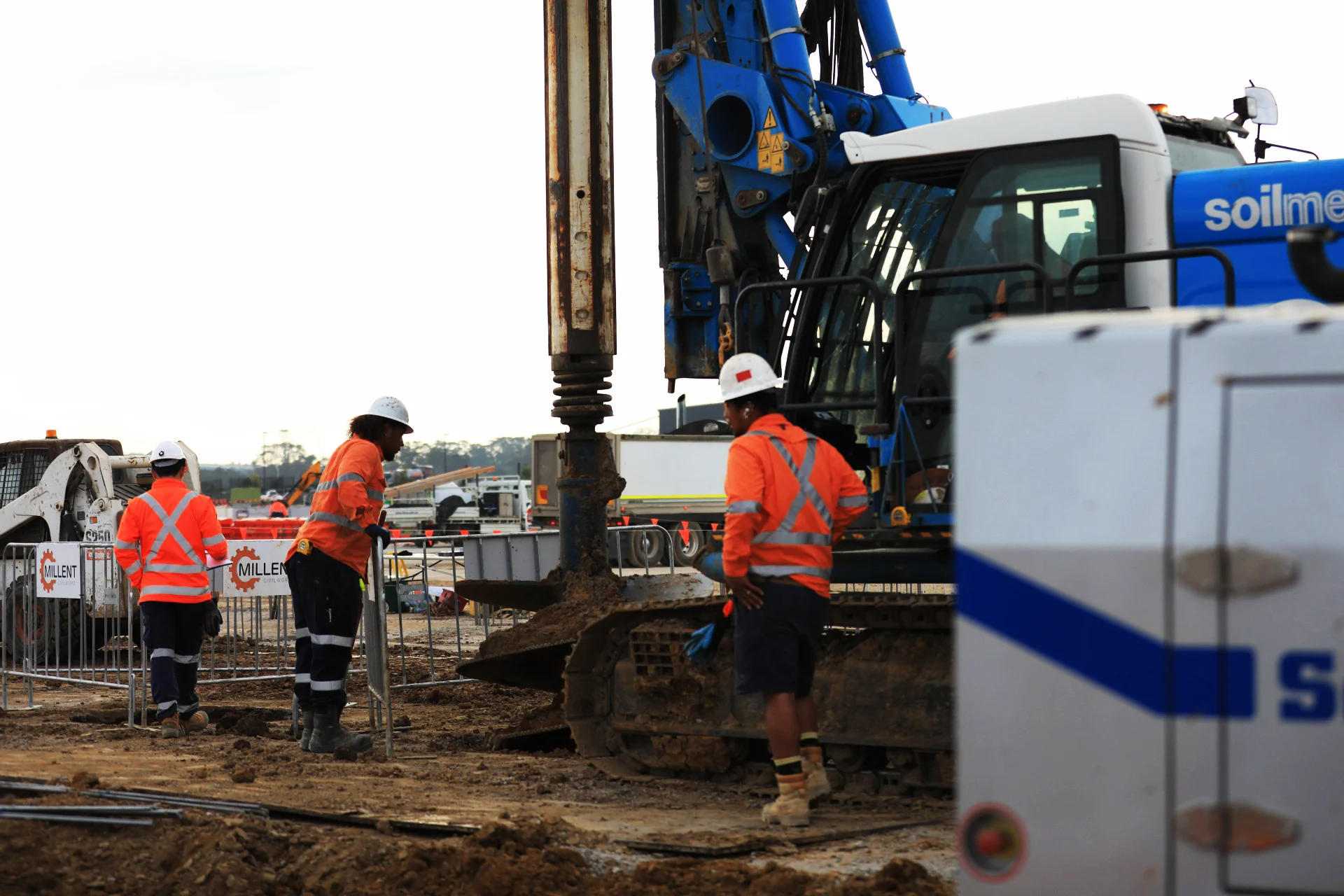
Our Penrith project moved 20,000 cubic metres of bulk excavation alongside 3,000 linear metres of CFA piling and 175 anchors reaching 13 metres, inside a 12 week program. One contractor across the piling, the ground anchoring and the dig removes the wait between benches.
Excavation across Sydney and NSW
Our excavation supports a wide range of project types:
- Basement excavation for commercial and multi-residential developments
- Bulk excavation to design levels on open industrial and warehouse sites
- Detailed excavation for pile caps, footings, lift pits and service trenches
- Rail and public infrastructure works, including corridor-adjacent digs
- Restricted access excavation on confined and split-level Sydney sites
Most of our excavation sits inside a wider retention scope, so the crew that digs the basement also installs the piles, the capping beam, the ground anchors and the shotcrete facing.
Why builders choose Millent for excavation
- Excavation priced with the retention system. We quote the piles, capping beam, anchors, shotcrete and the dig as one scope and sequence them as one program.
- Spoil and dewatering assessed up front. We identify the classification pathway and the approval pathway during estimating, before the first truck is loaded.
- In-house surveyor. Independent set-out and level checks through the detailed dig, with as-built records against design levels.
- Excavators from 4.5t to 35t. We size the machine to the working platform, from confined basement benches to open bulk digs.
- In-house mechanic. Our own workshop maintains the fleet, which keeps breakdowns off the critical path.
- Three generations of family expertise. Repeat excavation and shoring work from tier one and tier two builders.
Our Excavation equipment
Excavators
- 4.5t to 35t range: Sized to the working platform and the haulage cycle, covering confined benches through to open bulk digs and trimming to final level.
Supporting plant
- Schwing SP 1000, Soilmec SKP80, Flowcrete FC7H8HT and Transcrete P35 pumps: Concrete and grout delivery matched to the placement conditions where the excavation runs alongside piling and shoring works.
See the full equipment list across our piling and shoring fleet.
Frequently Asked Questions
Do I need to classify excavated soil before it leaves a site?
Yes. In NSW the business generating the waste is responsible for classifying it, and the NSW EPA sorts waste into six classes. A licensed facility can only accept the class it is authorised to receive, so material has to be classified before it is transported rather than after it arrives at the gate.
What is the difference between VENM and ENM?
Virgin excavated natural material is clean, undisturbed natural soil or rock with no contamination, and it attracts a concessional waste levy rate. Excavated natural material has been disturbed or carries low-level contamination, and it can be reused off site once it has been sampled and certified against the EPA criteria. Material containing asbestos, acid sulfate soils or sulfidic ores qualifies as neither.
Do I need approval to dewater an excavation in NSW?
Usually yes. Dewatering falls under the Water Management Act 2000, and WaterNSW issues the licences and approvals for most large basement projects. A temporary exemption removes the water access licence requirement for some eligible coastal construction projects, but the works approval requirement for pumps, bores and discharge stays in place.
Can you do the excavation and the shoring on the same project?
Yes. We design and install the piled wall, capping beam, ground anchors and shotcrete facing, then excavate inside our own retention system. Running both scopes with one contractor removes the handover between benches, which is where most bench-level delays start.
Do you deliver both bulk and detailed excavation?
Yes. We take sites from natural ground down to design level, then cut the pile caps, footings, lift pits, sumps and service trenches to the tolerances the structure needs. Our excavators run from 4.5 tonnes to 35 tonnes so the machine matches the stage of the dig.
What sets an excavation price apart on a constrained Sydney site?
Spoil classification and disposal, groundwater handling, truck access and staging space, wet weather allowance, and the interface with the shoring works. None of those appear on the drawings, and all of them move the number.